Popular
About this product
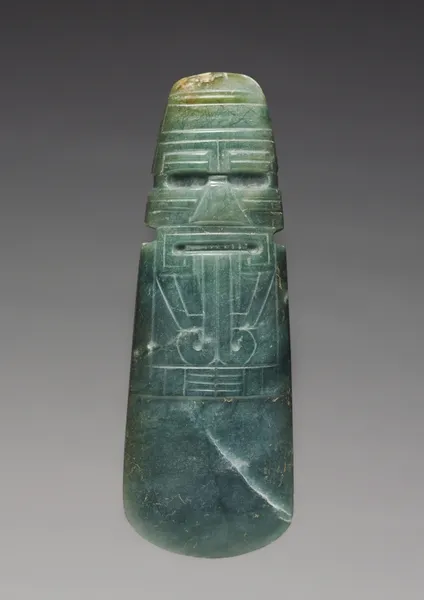
Costa Rican jade pendants may imitate the shape of axe blades (celts) used for agriculture. The pendants often take the form of "axe gods," creatures with human, bird, or animal traits. Jade carving was common in Costa Rica before ad 500, but then declined in importance. Gold eventually replaced jade as the region’s preferred luxury material.
Object — Jewelry
Made — c. 300 BCE–600 CE
Culture — Costa Rica, Southern Nicoya region
Technique — jadeite
Size — Overall: 15.2 x 5.4 cm (6 x 2 1/8 in.)
Collection — The Cleveland Museum of Art, 1972.4
Source: The Cleveland Museum of Art · Photo and text: CC0 1.0
Credit: The Cleveland Museum of Art, James Albert and Mary Gardiner Ford Memorial Fund
Characteristics
- Manufacturer
- Costa Rica