Popular
Low stock
About this product
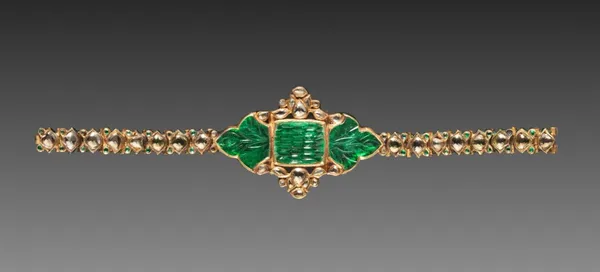
From the beginning of Emperor Jahangir’s reign in 1605, Mughal court culture became increasingly focused on jewels. Gems were the source of much of the court’s wealth, and the diamond mines of the southern regions of the Deccan provided financial incentives for Mughal conquest of those territories. According to European diplomatic accounts, gems were the preferred gift to the emperor. This bracelet was likely produced in the city of Jaipur in northwestern India, which was famed for its jewelry and enamel making and has been known as a major producer of Kundan since the 18th century. Kundan is a traditional form of Indian jewelry wherein gemstones are set into gold foil. Emeralds, like the stones seen here, arrived in India from Colombia via Portuguese merchants in Goa.
Object — Jewelry
Made — 1700s
Culture — India, Mughal, Rajasthan, Jaipur, 18th century
Technique — Gold, emeralds, diamonds, and enamel
Size — Overall: 4 cm (1 9/16 in.)
Collection — The Cleveland Museum of Art, 1966.516
Source: The Cleveland Museum of Art · Photo and text: CC0 1.0
Credit: The Cleveland Museum of Art, Bequest of Anne Jessop Smith
Characteristics
- Manufacturer
- India