Popular
About this product
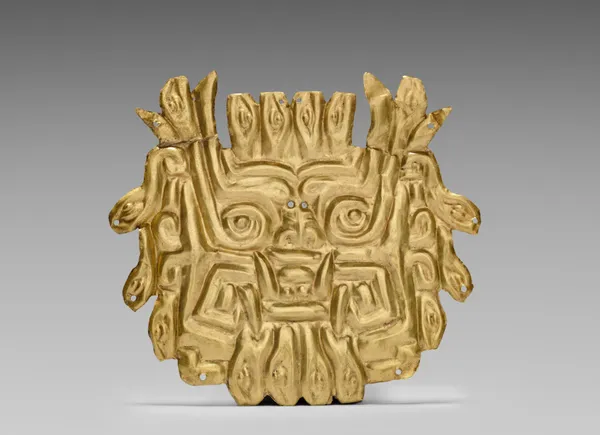
These plaques showing a powerful Chavín deity may come from a group of gold objects found in a lavish tomb in the 1920s. One is shaped as the deity’s fanged head, its fur transformed into sixteen serpents that edge the plaque. On the other, the deity’s visually elusive body also appears: the clawed hands over the chest may clutch a horizontal staff, an emblem of authority; across the waist is a belt that sprouts serpents; and beneath are the legs and feet, which stand atop fanged masks.
Object — Jewelry
Made — c. 500–200 BCE
Culture — Peru, North Coast, Chongoyape(?), Chavín style (900-200 BCE)
Technique — hammered and cut gold
Size — Overall: 12.5 x 13.8 cm (4 15/16 x 5 7/16 in.)
Collection — The Cleveland Museum of Art, 1938.431
Source: The Cleveland Museum of Art · Photo and text: CC0 1.0
Credit: The Cleveland Museum of Art, Dudley P. Allen Fund
Characteristics
- Manufacturer
- Peru